Abrasive Cleaning
Abrasive cleaning prepares your parts for painting—and our team aims to accomplish projects of all scopes and sizes.
Sandblasting is how we got our start here at Colonial. First, it was our own farm equipment. Then, the neighbors. As demand grew, so did our operation. And now, more than 50 years later, we have the capacity to tackle any abrasive cleaning project that we come across.
We pride ourselves on staying ahead of the industry, surpassing our competition with upgrades of the latest abrasive cleaning machines. This allows us to provide our customers with timely, accurate, and thorough service.
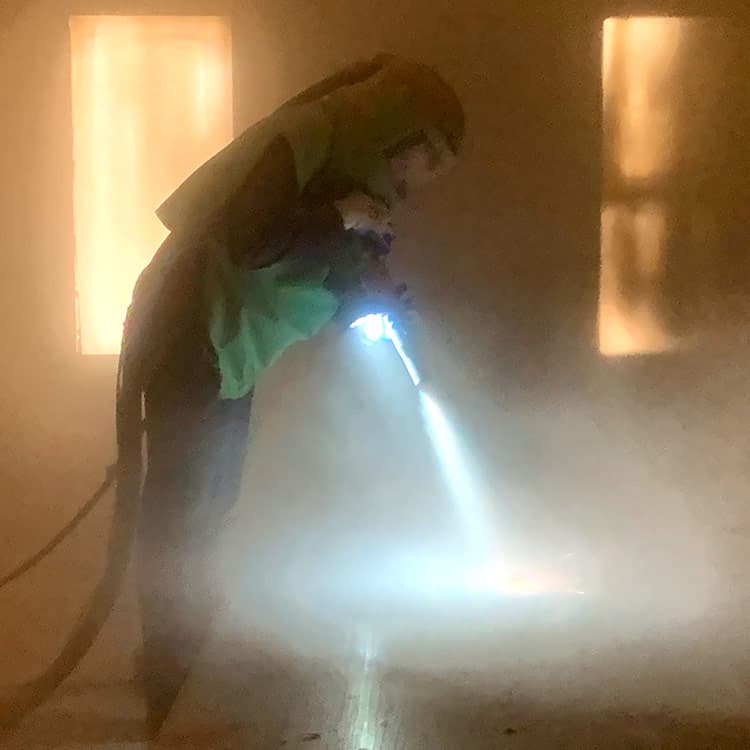
Through abrasive cleaning, we can ensure the substrate contains the appropriate texture, therefore allowing proper adhesion for paint and powder applications. Every paint and blast application is designed around our customer needs, thus ensuring your complete satisfaction. Our standard blasting media includes steel grit & shot, garnet, and glass bead. Additional blasting materials may also be available upon your request to meet your specific project requirements.
At Colonial, we have a variety of equipment and media available to meet your cleaning needs so that multiple parts of almost any size can be accommodated. Our team utilizes environmentally friendly and efficient abrasive cleaning machines. No matter your needs or the scope of the project, we’re here for you.
Colonial Abrasive Cleaning Specs
-
SSPC-SP 1:
-
Solvent Cleaning
Solvent Cleaning removes surface contaminants that could interfere with coating performance. This process focuses on eliminating visible oil, grease, dirt, and other soluble materials from steel surfaces prior to coating application.
Depending on project requirements, solvent cleaning may be performed using approved cleaning agents, steam, or emulsifying solutions to ensure the surface is free of residues that could affect adhesion or finish quality.
-
SSPC-SP 2:
-
Hand Tool Cleaning
Hand tool cleaning refers to surface preparation that uses non-power handheld tools to clean a steel surface. Hand tool cleaning is intended to remove all loose (as opposed to adherent) mill scale, rust, paint, and other contaminants that may be detrimental to a coating application. According to SSPC, “adherent” contaminants are those that can’t be removed by lifting them off with a dull putty knife.
-
SSPC-SP 3/
NACE No. 6: -
Power Tool Cleaning
Power Tool Cleaning is a surface preparation method that uses powered tools to remove loose mill scale, rust, paint, and other contaminants from steel surfaces prior to coating.
This level of preparation focuses on removing materials that are not tightly bonded to the substrate. Adherent contaminants, defined as those that cannot be removed using a dull putty knife, are permitted to remain when this standard is specified.
-
SSPC-SP 5/
NACE No. 1: -
White Metal Blast Cleaning
This method is the highest level of abrasive blast cleaning for steel surfaces. This standard is used when a surface must be completely clean and free of all visible contaminants prior to coating application.
A surface prepared to this standard is uniformly white or gray in appearance and, when viewed without magnification, contains no visible oil, grease, dirt, dust, mill scale, rust, coatings, corrosion products, or other foreign matter. This level of preparation is typically specified for demanding coating systems where maximum cleanliness and performance are required.
-
SSPC-SP 6/
NACE No. 3: -
Commercial Blast Cleaning
This method uses abrasive blast media to clean steel surfaces prior to coating. This standard is commonly specified when a thorough level of cleanliness is required, but limited staining from previous service conditions is acceptable.
Surfaces prepared to this standard are free of visible oil, grease, dirt, dust, mill scale, rust, coatings, corrosion products, and other foreign matter when viewed without magnification. Light staining from prior exposure may remain, provided it does not exceed 33 percent of each defined surface area. Acceptable staining may appear as light shadows, slight streaks, or minor discoloration.
-
SSPC-SP 7/
NACE No. 4: -
Brush-Off Blast Cleaning
This is an abrasive blasting standard used to clean steel surfaces while retaining tightly adhered material. This method is applied to painted or unpainted steel when surface preparation is needed without removing all existing mill scale, rust, or coatings.
Surfaces prepared to this standard must be free of visible oil, grease, dirt, and dust when viewed without magnification. Loose mill scale, rust, and coatings are removed during blasting, while tightly adherent materials may remain. Material is considered tightly adhered if it cannot be removed with a dull putty knife.
-
SSPC-SP 10/
NACE No. 2: -
Near-White Metal Blast Cleaning
This abrasive blasting standard is used when a very high level of surface cleanliness is required prior to coating. This method is specified for painted or unpainted steel surfaces and includes defined criteria for both achieving and verifying the final surface condition.
Surfaces prepared to this standard are free of visible oil, grease, dirt, dust, mill scale, rust, coatings, corrosion products, and other foreign matter when viewed without magnification. A small amount of staining is permitted, but it may not exceed five percent of each defined surface area. Acceptable staining may appear as light shadows, slight streaks, or minor discoloration resulting from previous rust, mill scale, or coatings.
Solvent Cleaning
Solvent Cleaning removes surface contaminants that could interfere with coating performance. This process focuses on eliminating visible oil, grease, dirt, and other soluble materials from steel surfaces prior to coating application.
Depending on project requirements, solvent cleaning may be performed using approved cleaning agents, steam, or emulsifying solutions to ensure the surface is free of residues that could affect adhesion or finish quality.
Hand Tool Cleaning
Hand tool cleaning refers to surface preparation that uses non-power handheld tools to clean a steel surface. Hand tool cleaning is intended to remove all loose (as opposed to adherent) mill scale, rust, paint, and other contaminants that may be detrimental to a coating application. According to SSPC, “adherent” contaminants are those that can’t be removed by lifting them off with a dull putty knife.
Power Tool Cleaning
Power Tool Cleaning is a surface preparation method that uses powered tools to remove loose mill scale, rust, paint, and other contaminants from steel surfaces prior to coating.
This level of preparation focuses on removing materials that are not tightly bonded to the substrate. Adherent contaminants, defined as those that cannot be removed using a dull putty knife, are permitted to remain when this standard is specified.
White Metal Blast Cleaning
This method is the highest level of abrasive blast cleaning for steel surfaces. This standard is used when a surface must be completely clean and free of all visible contaminants prior to coating application.
A surface prepared to this standard is uniformly white or gray in appearance and, when viewed without magnification, contains no visible oil, grease, dirt, dust, mill scale, rust, coatings, corrosion products, or other foreign matter. This level of preparation is typically specified for demanding coating systems where maximum cleanliness and performance are required.
Commercial Blast Cleaning
This method uses abrasive blast media to clean steel surfaces prior to coating. This standard is commonly specified when a thorough level of cleanliness is required, but limited staining from previous service conditions is acceptable.
Surfaces prepared to this standard are free of visible oil, grease, dirt, dust, mill scale, rust, coatings, corrosion products, and other foreign matter when viewed without magnification. Light staining from prior exposure may remain, provided it does not exceed 33 percent of each defined surface area. Acceptable staining may appear as light shadows, slight streaks, or minor discoloration.
Brush-Off Blast Cleaning
This is an abrasive blasting standard used to clean steel surfaces while retaining tightly adhered material. This method is applied to painted or unpainted steel when surface preparation is needed without removing all existing mill scale, rust, or coatings.
Surfaces prepared to this standard must be free of visible oil, grease, dirt, and dust when viewed without magnification. Loose mill scale, rust, and coatings are removed during blasting, while tightly adherent materials may remain. Material is considered tightly adhered if it cannot be removed with a dull putty knife.
Near-White Metal Blast Cleaning
This abrasive blasting standard is used when a very high level of surface cleanliness is required prior to coating. This method is specified for painted or unpainted steel surfaces and includes defined criteria for both achieving and verifying the final surface condition.
Surfaces prepared to this standard are free of visible oil, grease, dirt, dust, mill scale, rust, coatings, corrosion products, and other foreign matter when viewed without magnification. A small amount of staining is permitted, but it may not exceed five percent of each defined surface area. Acceptable staining may appear as light shadows, slight streaks, or minor discoloration resulting from previous rust, mill scale, or coatings.
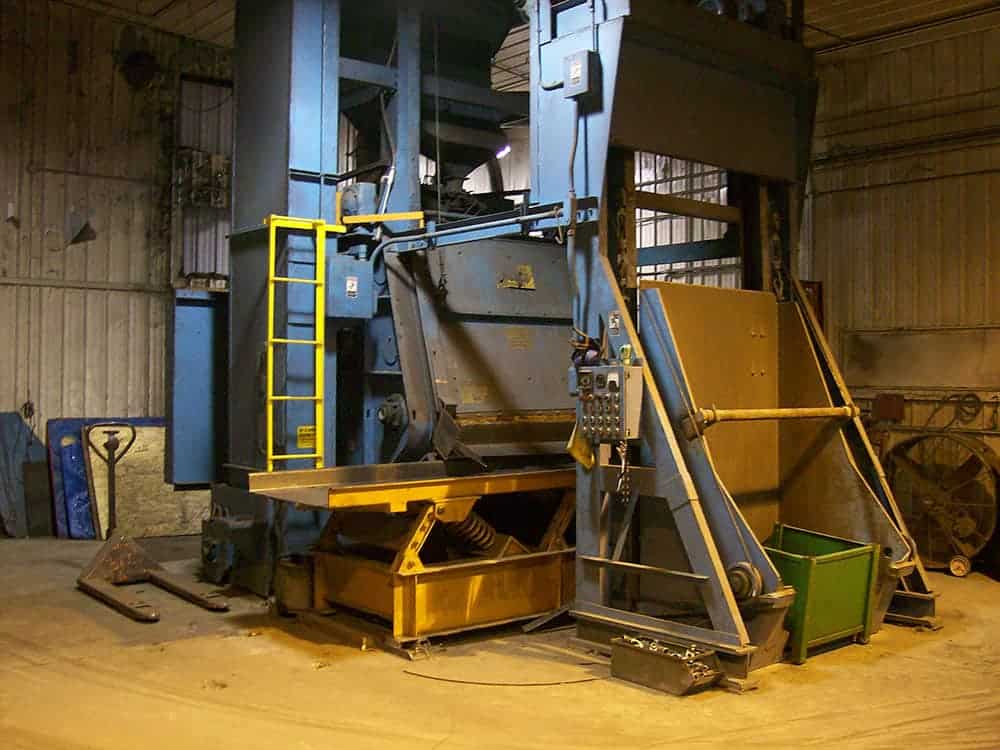
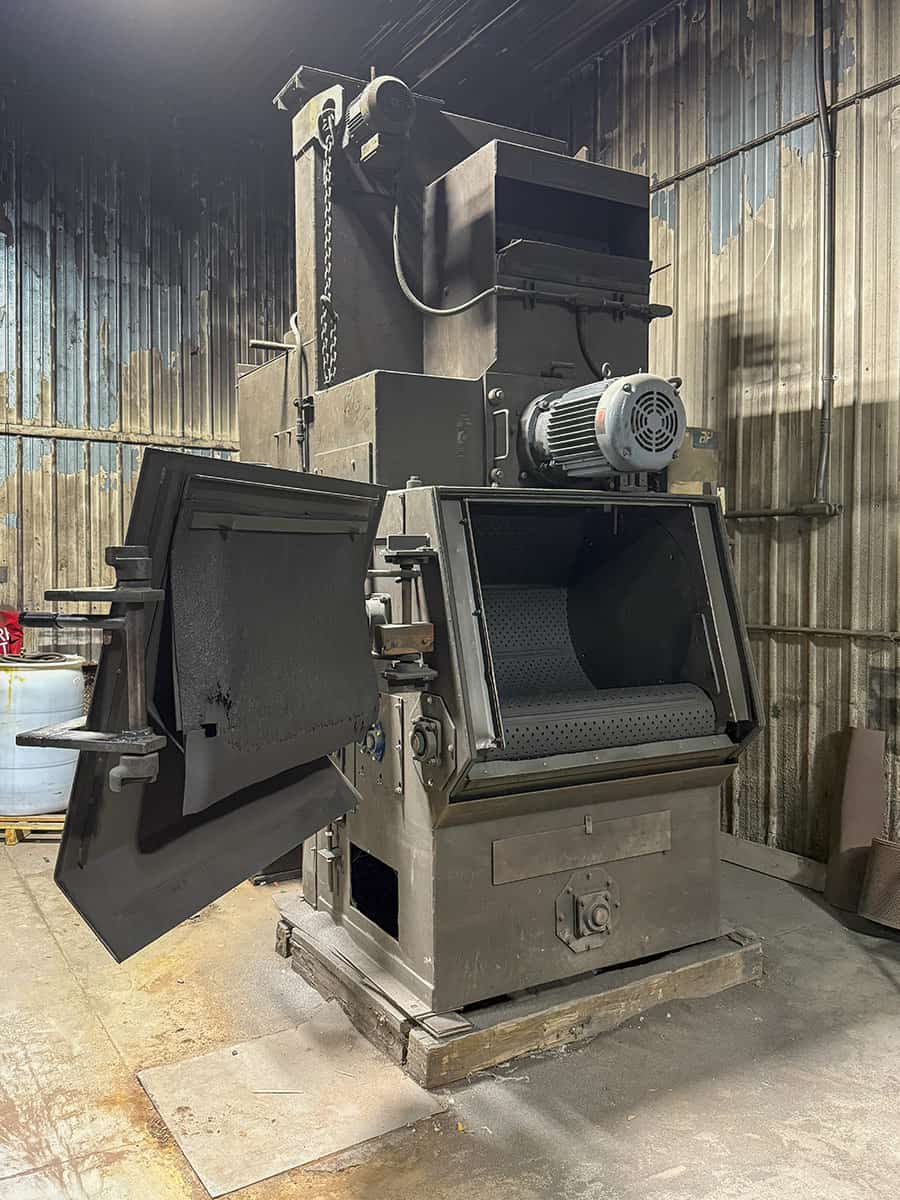
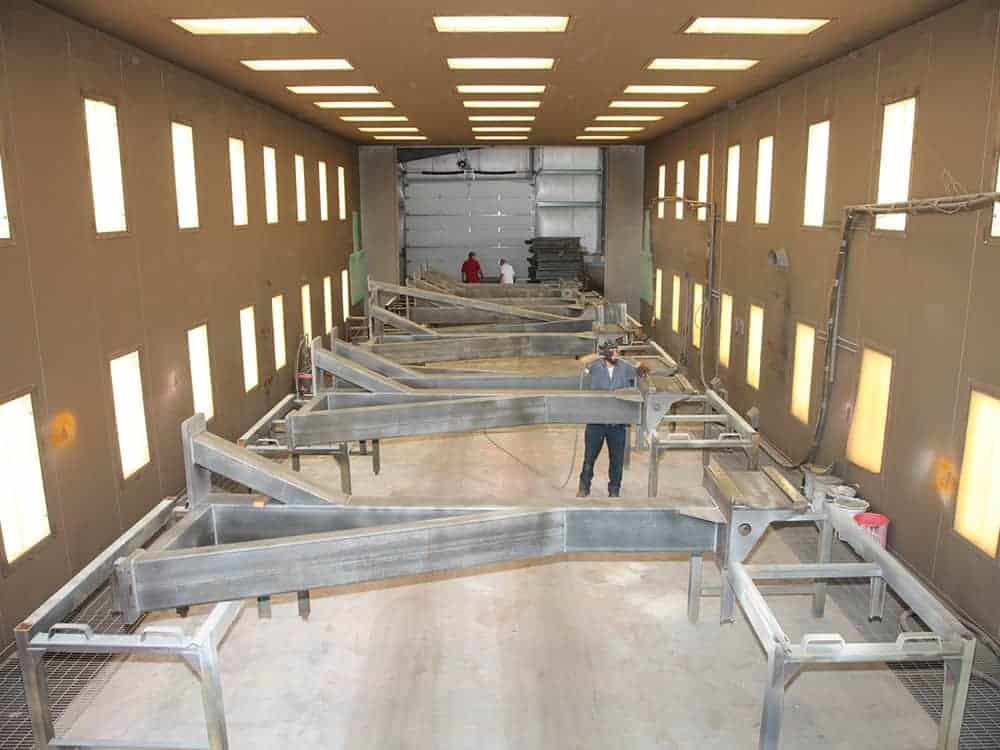
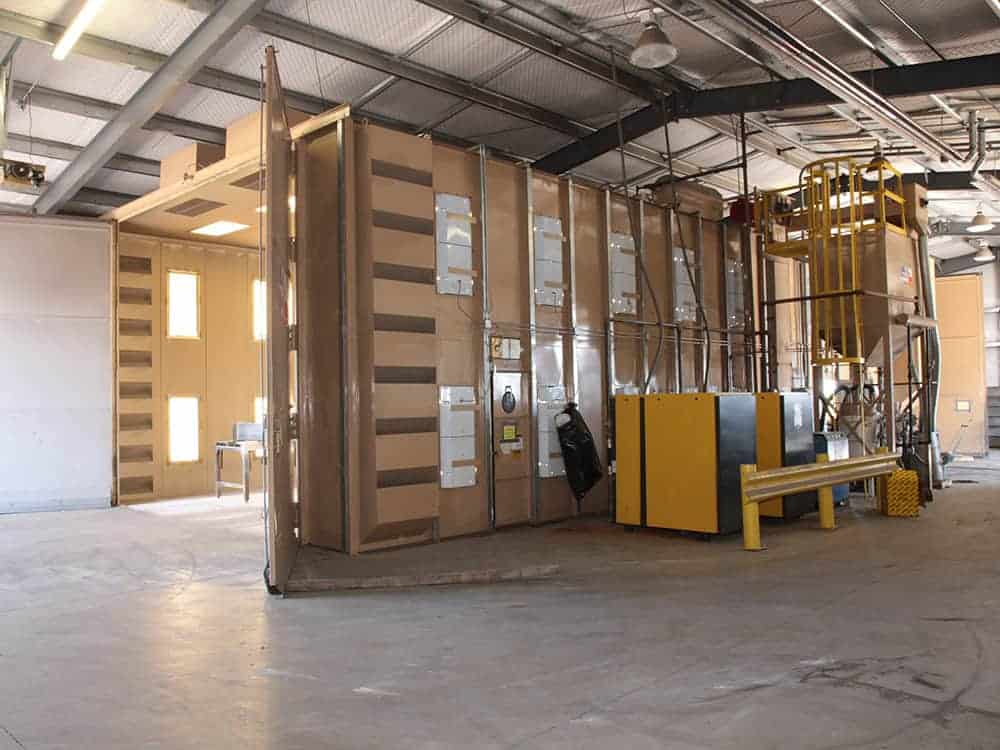
Our machines include:
- A 26-cubic foot tumble blast machine, capable of cleaning up to 4,000 pounds per batch of heavy castings or rough weldments
- A 6-cubic foot rubber belt, tumble blast machine for lightweight and delicate parts
- A 60-inch table-based blast machine that allows for 360-degree access for cleaning
- An 8-wheel, vertical descaling machine for large part abrasive cleaning with a monorail or continuous flow roller system
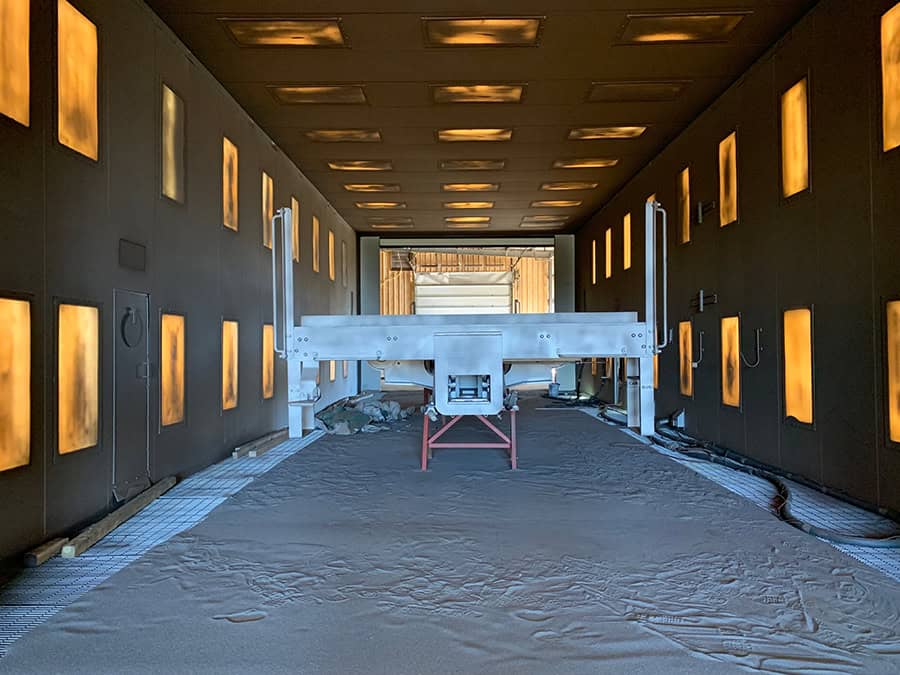
In addition to automated cleaning, we can also utilize numerous types of pressure blasting which can accommodate virtually any size of part or component. We have two large blast booths measuring 60’ long x 24’ wide x 18’ tall. Our team has access to media such as: steel grit, steel shot, aluminum oxide, garnet, and glass bead. Other media is available upon request.
Talk with Our Team About the Right Process for Your Project
If your project requires a specific media, Colonial can assemble the right process to meet your firm’s requirements. Give our team a call at 419-659-5639 to discuss your project.