What is Military CARC Coating?
At its core, CARC is a non‑porous, chemically resistant coating that prevents chemical and biological warfare agents from penetrating surfaces. This is crucial because porous or conventional paints can absorb contaminants, making decontamination slow, incomplete, or even impossible. CARC solves this by creating a tough, impermeable shell that allows contaminants to be washed away quickly using strong decontamination solutions—without damaging the coating itself.
CARC coatings are typically applied as part of a multi‑layer system. The process begins with a pretreatment that prepares the metal and enhances corrosion resistance. Next comes a high‑performance epoxy primer, which bonds tightly to the substrate and provides a stable foundation. The final layer is the polyurethane CARC topcoat, the star of the system, offering chemical resistance, infrared signature reduction, and exceptional durability. Together, these layers form a protective barrier capable of withstanding extreme temperatures, abrasion, UV exposure, and the corrosive effects of sand, salt, and moisture.

One of CARC’s lesser‑known but highly strategic features is its ability to reduce infrared reflectivity. This helps military vehicles blend into their surroundings not just visually, but electronically, making them harder to detect with night‑vision or heat‑sensing equipment. In modern warfare, where detection often equals vulnerability, this capability is invaluable.
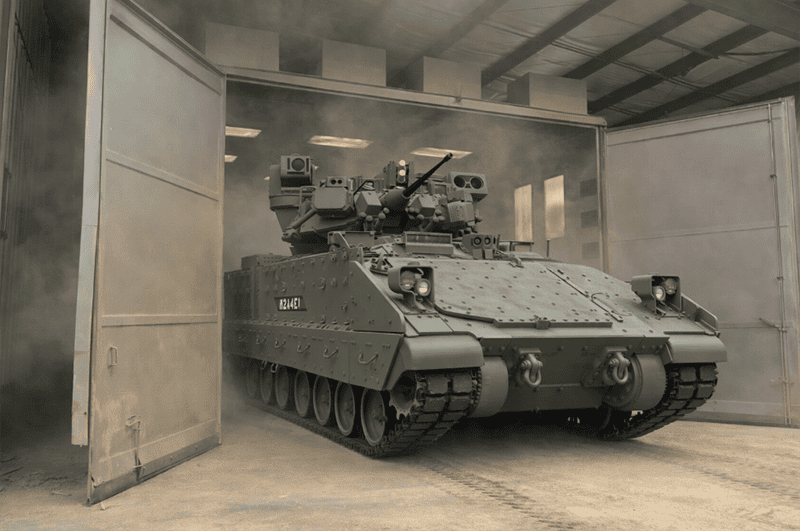
CARC coatings are used across nearly all U.S. military tactical equipment—from Humvees and MRAPs to helicopters, generators, and mobile shelters. Because of their specialized nature and national security implications, CARC materials are tightly regulated under ITAR, ensuring they’re produced and applied only by certified manufacturers and facilities.
Whether you’re in manufacturing, maintenance, or procurement, understanding CARC is essential. It’s more than paint—it’s a critical layer of defense that keeps equipment operational, soldiers safer, and missions on track.
Military CARC Coating Process Overview
Application of CARC coatings requires strict process control, validated surface preparation, and specification-driven application parameters to achieve compliance and performance requirements.
Surface Preparation: Components are cleaned using heated alkaline wash systems to remove oils, machining fluids, and surface contaminants that could adversely affect coating adhesion or performance.
Abrasive Blasting: Substrates are abrasive blasted using 60/80 mesh virgin grit in accordance with TT-C-490 to produce the required surface profile.
Chemical Treatment: Where required, parts may undergo conversion coating, phosphate treatment, or passivation in accordance with MIL-DTL-5541 requirements.
Primer Application: Approved primer systems are applied in accordance with applicable military specifications including MIL-DTL-53022, MIL-PRF-23377, and MIL-DTL-11414F.
CARC Topcoat Application: CARC topcoats are applied per specifications including MIL-DTL-53039, MIL-DTL-53072, MIL-PRF-22750, and MIL-DTL-24441.
Curing and Inspection: Coated components undergo controlled curing and inspection, including Wet Film Thickness (WFT) and Dry Film Thickness (DFT) measurements.
Defense CARC Capabilities at Colonial Surface Solutions

Colonial Surface Solutions supports both large-scale military programs and medium-volume production requirements requiring CARC compliance. The Defense Division provides controlled abrasive blasting operations, precision CARC primer and topcoat application, inline curing oven
systems, an ISO 9001-certified quality management program, ITAR-compliant processing and documentation, environmental monitoring and regulatory reporting, and 100 percent inspection prior to release.
With more than 20 years of military coating experience, the team understands the documentation, traceability, and process discipline required for defense applications.
Partner With an Experienced Military CARC Coating Provider
Military CARC coatings require strict process control and quality assurance. Working with an experienced provider helps ensure compliance with military specifications and long-term coating performance.
Colonial Surface Solutions provides advanced metal cleaning and coating solutions for defense, industrial, and commercial applications.